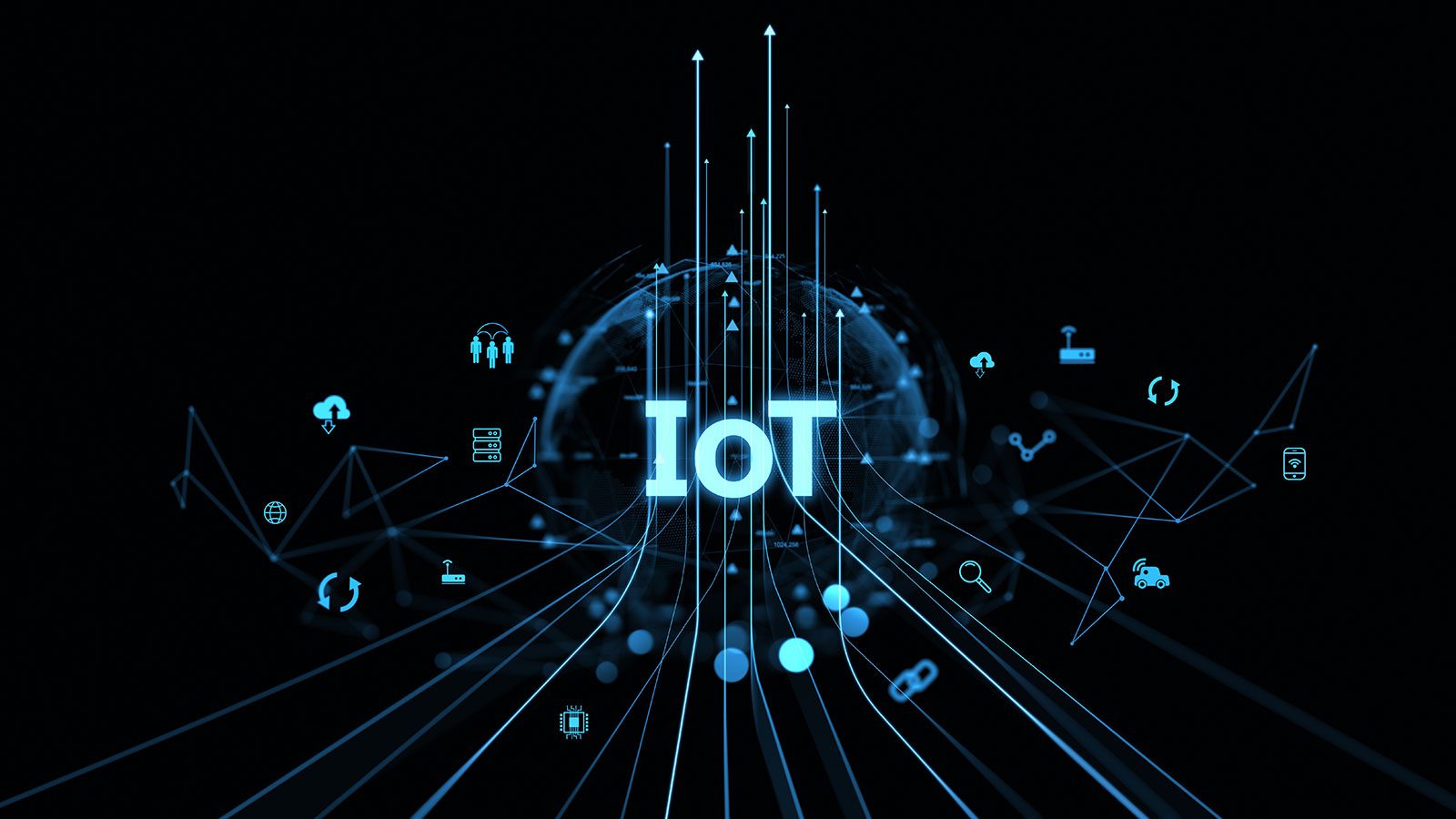
Most IT teams now run a mixed estate: traditional IT (users, networks, cloud apps), IoT (sensors, cameras, smart devices) and OT (industrial control systems, building management, production lines). Each domain usually arrives with its own tooling, its own jargon, and its own single pane of glass that does not talk to the others.
The result is familiar: lots of alerts, slow root-cause analysis, and stakeholders who only ever hear "something is down" with no clear answer on impact. Observability247 changes the game by focusing on outcomes and context rather than device status. Instead of asking "is this switch up?", it helps you answer "why is this service slow, what is the impact, and what do we do next?"
Why a converged estate is hard for traditional monitoring
Traditional monitoring works best when systems are consistent and predictable. Converged estates are the opposite:
- Many different devices and protocols (MQTT, Modbus, BACnet, OPC UA, vendor APIs, legacy serial gateways).
- Edge constraints: limited compute, patchy connectivity, bandwidth cost.
- Long-lived OT assets, often years or decades old, under strict change control.
- Safety and availability needs, where "just patch it" is not realistic.
- Security blind spots as unmanaged devices appear on the network.
When these collide, teams drown in symptoms: a device-offline alert, a high-latency warning, an application incident and a production dip, all treated as separate problems.
What observability adds: correlation, context and business impact
Observability247 brings telemetry (metrics, logs, events, traces) together from IT systems, OT platforms and IoT devices, then connects it to services and outcomes.
A shared model of what depends on what
Service maps link IoT devices to gateways to network segments to edge compute to cloud services to the user experience, and for OT they link controllers and PLCs to SCADA and HMI to the historian to analytics to the business dashboard. When something fails, you see the blast radius at once. If a wireless controller drops in a warehouse, you can trace how it hits handheld scanners, picking workflows and dispatch times, not just the controller itself.
Fewer alerts, more answers
Instead of hundreds of threshold alarms, observability folds the signals into a smaller set of incidents. "Temperature sensors dropped out" plus "gateway CPU pegged" plus "packet loss on VLAN 40" becomes one line: "gateway overload is causing telemetry loss for cold-storage zone B." Triage speeds up, the finger-pointing stops, and you fix causes rather than chase noise.
Faster root cause across domains
The biggest gains come when incidents cross boundaries:
- An OT slowdown that turns out to be a DNS change in IT.
- An IoT device flood that saturates a link and degrades voice and video.
- A cloud rule change that stops edge data ingestion and breaks operational reporting.
With observability, IT, security and operations all work from the same evidence trail.
Better security without breaking OT
Observability247 supports a practical approach to IoT and OT security: asset discovery and behaviour baselines, detection of unusual communication patterns, visibility of patch and firmware drift, and audit-ready timelines. This matters most in OT, where intrusive scanning is not acceptable. You get the insight from passive signals, logs and network telemetry instead.
Turning signals into business insight
The best programmes tie telemetry to business outcomes: throughput (units per hour, orders shipped), quality (defect and rework rates), availability (uptime of critical lines and sites) and customer experience (queue times, delivery, app latency). Map the services end to end and you can answer business questions quickly: are we missing SLAs because of carriers, systems or the warehouse? Which sites suffer repeat OT downtime, and why? What is unstable connectivity costing us in output? That is the difference between an IT report and a decision.
How to start without boiling the ocean
- Pick one business-critical journey, such as order-to-dispatch or store payments.
- Instrument the choke points first: gateways, core switches, key apps and OT supervisory systems.
- Normalise and tag the telemetry by site, line, zone, asset type and owner.
- Define service levels that matter, not just "device up" but "telemetry under sixty seconds old" and "transaction success rate".
- Automate the first response, with context-rich tickets and safe remediation steps.
The payoff
Observability247 lets a team run IoT, OT and IT as one connected system. It cuts alert noise, shortens incident resolution, improves security visibility, and turns raw performance data into a clear picture of service health and business impact.